


The Spy Games of World War I
World War I began the modern age of warfare during the early 20th century. It was a conflict defined by trench warfare, heavy artillery, aircraft, submarines, and later tanks, all wrapped into one explosive cocktail. Yet, behind the outright carnage of World War I, there was another conflict of spy games between the fledgling intelligence services in Britain, Germany, Russia, and France. The first global war transformed espionage into more organized state bureaus. Intelligence services such as the Deuxième Bureau, MI5/MI6, and Abteilung III b performed spy, cryptography, and counter-intelligence operations throughout World War I.
The First Captured Spy of World War I
Germany started deploying spies shortly after World War I began. Carl Hans Lody is known to be the first captured spy of the war. He was a spy Germany sent to Edinburgh during the summer of 1914 to keep an eye on the Firth of Forth (a Scottish sea inlet). It was there that Britain had one of its most significant Royal Navy bases, which was of considerable interest to the Germans.

Lody posed as an American tourist with a Charles A. Inglis alias when he checked into an Edinburgh hotel during August 1914. He passed on information gathered to a German agent in Stockholm. Fortunately for Britain, Lody was not an especially proficient spy. Lody reported misguided details for landings of large numbers of Russian troops in Scotland based on inaccurate rumors rather than facts. He utilized simple code for some telegrams sent, but plain text for others.

Carl Lody was seemingly poorly trained in the art of espionage. A suspicious MI5
monitored his messages and spying activities closely. MI5 quickly identified that Lody was an enemy spy because it knew the contact address for his intercepted messages to be a cover front for German intelligence. The British even allowed some of his messages that included misleading information to be sent.
Lody later travelled to Dublin, Ireland, where he continued to send uncoded intelligence messages to the Germans during September 1914. MI5 pounced to arrest Lody in October, discovering tickets that revealed his true identity. He stood trial for war treason in London, where he confessed to being a German spy. The court gave Lody the death sentence, and he was duly executed at the Tower of London in November 1914.
The arrest of Carl Hans Lody was a part of a wider MI5 counter-intelligence operation that began during the early months of World War I. Lody was among the first of numerous captured German spies. MI5’s historical records reveal that Britain captured approximately 65 German spies during World War I.
The Conviction of Mata Hari

Mata Hari, otherwise Margaretha Geertruida Zelle, was a famous and exotic Dutch dancer who performed in Paris. She was in Berlin when World War I started, and travelled in and out of France. Mata Hari’s travel patterns and relationships with German officials aroused British suspicions that she might be a spy. British police duly detained and questioned Hari in 1915, but could not find any incriminating evidence to arrest her.
Nevertheless, British suspicion of Hari remained and was duly shared with the French. To test Hari, the Deuxième Bureau (Georges Ladoux of the French Intelligence Service) asked her to become a spy for France. Hari agreed to become a French agent for millions of francs in return. As a French agent, she targeted German officers in Madrid, such as Arnold Kalle. Kalle sent a telegram via a code the Germans knew France had broken, confirming Hari to be Agent H21. Agent H21 was a codename that German intelligence assigned to Hari.
This intercepted message seemingly highlighted that Hari was acting as a German double agent. France duly arrested Hari in February 1917 on charges of espionage. She stood trial as an alleged German spy, with the prosecution claiming she had leaked British tank information to the Germans before the Battle of the Somme. The court judged Hari to be guilty of dangerous spying for the Germans and delivered her death sentence on July 25, 1917. She was duly executed in October 1917.
Considerable doubts remain that Hari was given a fair trial. All Hari admitted was that she had received money (20,000 francs) from a consul in the German intelligence network, but did not necessarily provide any serious intelligence information. Some historians claim that Hari’s sentence appeal was denied because the French government needed a convenient scapegoat for military failings in 1917. Georges Ladoux was also interestingly arrested for spying days after the execution of Mari Hari. However, Ladoux was acquitted of the charges against him after World War I.
Fritz Joubert Duquesne's Sabotage of British Ships
Carl Hans Lody and Mata Hari were executed for their spy games, but Fritz Joubert Duquesne was one German agent who survived World War I and even returned to service in the Second World War. He was formerly a soldier who fought against the British in the Second Boer War. Duquesne resented the UK because of British crimes against his family during the Boer War.

Although it is not clear whether Duquesne volunteered or was recruited, he became a German sabotage spy during World War I based on the old proverb “my enemy’s enemy is my friend.” To assist the Germans, Duquesne sabotaged British merchant shipping in South America by switching identities and planting explosives disguised as mineral sample boxes on them. Duquesne boasted (and feasibly exaggerated) that he sabotaged up to 22 ships during World War I, such as the SS Tennyson, Pembrokeshire, and Salvador.
Duquesne tried to cash in on such sabotage by falsely claiming losses he had incurred after the Tennyson ship incident. The Americans discovered Duquesne was a German spy when they arrested him for insurance fraud in 1917. They found he possessed a letter from a German consul thanking him for considerable services to Germany’s cause.
Thereafter, Duquesne was set to stand trial in Britain. However, Duquesne avoided trial by faking paralysis for a few years before escaping from the hospital. He returned to active espionage service for Germany during World War II by forming a Nazi spy ring in the USA, which the FBI busted in 1941.
Sidney Reilly and the Lockhart Plot
Sidney Reilly, now known as the Ace of Spies, is one of the more famous MI6 agents from the World War I era. He was a Russian who had served British intelligence before and during World War I. However, not until 1918 did Reilly join MI6 to become a spy for Britain. He allegedly collaborated with Robert Bruce Lockhart in a plot to assassinate Lenin.

Britain initially sent agents like Robert Bruce Lockhart to Russia to convince the Bolsheviks not to make a separate peace deal with the Germans, but such attempts failed. The signing of the Treaty of Brest-Litovsk on March 3, 1918, which ended Russian participation in World War I, alarmed the British. That treaty gave the Germans one last hope of victory as it enabled them to reinforce forces in France by redeploying divisions in Eastern Europe.
Britain and America duly deployed separate forces to Russia to intervene in an emerging Russian Civil War during 1918. Sidney Reilly revealed in his memoir, “Adventures of a British Master Spy,” that he went to Russia in 1918 to assist with the objective of overthrowing the emerging communist Bolshevik regime, which had betrayed Britain and France during World War I. He confirmed that the original plan was to arrest Lenin and Trotsky by bribing the mercenary Latvian Lettish garrison to initiate an anti-Bolshevik uprising in Moscow. Reilly wrote this about that scheme in his memoirs:
All arrangements were made for a provisional government… The most formidable obstacle in our path was constituted by the Lettish garrison, who, as I have explained, were mercenaries in the pay of the Bolsheviks. I must buy their support. Secondly, I must time the rising when both Lenin and Trotsky should be in Moscow. Lenin and Trotsky were Bolshevism. Once they were removed, the whole foul institution would crumble to dust, but while they lived, there could be no peace in Russia. It was accordingly necessary for our success to arrest Lenin and Trotsky at the first blow.
It has been speculated, without conclusive proof, that this plan to arrest the Bolshevik leaders became a plot to assassinate Lenin. A report to the British War Office from Captain G. A. Hill reveals that Reilly did at least consider assassinating Lenin. A passage from that report states:
About the 22nd of August, Lt Reilly informed me of a conversation he had with Commander Bershin… The gist of it was that it was considered advisable that men like Lenin and Trotsky should be assassinated for the following reasons:
Their marvellous oratorical powers would so act on the psychology of the men who went to arrest them that it was not advisable to risk it.
The assassination of the two leaders would create a panic so that there would be no resistance.
Lt Reilly also told me that he had been very firm in dissuading them from such a course and that in no way would he support it.
This British scheme to overthrow the Bolshevik regime (known as the Lockhart
Plot) by arresting or assassinating Lenin failed. A Russian woman, Fanny Kaplan, attempted to assassinate Lenin on August 30, 1918. That assassination attempt was not connected to the Lockhart Plot, but it triggered a Cheka (Soviet secret police and intelligence agency) clampdown in Russia. Sidney Reilly managed to flee from Russia, but the Cheka arrested Robert Lockhart. Cheka records confirm that Lockhart admitted involvement in a plot to assassinate Lenin.

Russian papers reported that Lockhart had led a conspiracy to raise the Letts, kill Bolshevik leaders, and restore the Russian monarchy. However, Lockhart (whom the Cheka released in a hostage exchange) later denied involvement in a plot to assassinate Lenin. A passage in his memoirs says this:
On Tuesday, we read the full tale of our iniquities in the Bolshevik Press, which excelled itself in a fantastic account of a so-called Lockhart Plot. We were accused of having conspired to murder Lenin and Trotsky, to set up a military dictatorship in Moscow, and by blowing up all the railway bridges to reduce the populations of Moscow and St. Petersburg to starvation. The whole plot had been revealed by the loyalty of the Lettish garrison, whom the Allies had sought to suborn by lavish gifts of money. The whole story, which read like a fairy tale, was rounded off with a fantastic account of my arrest.
Thus, Lockhart played down any notable relationship with Reilly. However, a discovered letter from Lockhart’s son revealed that his father might have been lying. One passage from that letter states, “My father has himself made it clear to me that he worked much more closely with Reilly than he had publicly indicated.” The extent of the Lenin assassination plot remains debated today.
The Decryption of the Zimmerman Telegram
For all the daring secret agents of World War I, it was Britain’s Room 40 that pulled off one of the biggest intelligence coups during that conflict. Room 40 was a cryptanalysis department of British Naval Intelligence that spied on Germany by deciphering secret German messages. Britain had obtained copies of a German naval codebook and diplomatic code that enabled Room 40 to decipher more enemy messages.
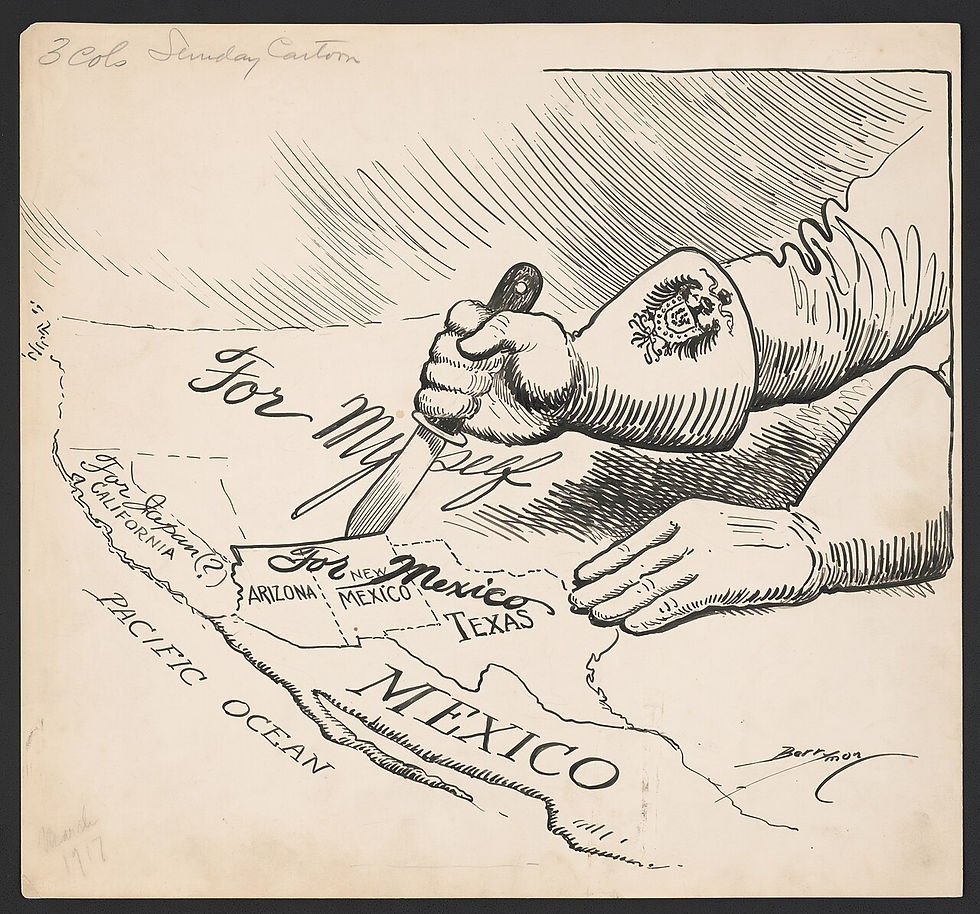
One of the biggest accomplishments of Room 40 was the interception and decryption of what became known as the Zimmerman Telegram. This telegram, named for its sender, German Foreign Secretary Arthur Zimmermann, was an overture to Mexico to form an alliance against the United States. Room 40 intercepted and shared the Zimmerman Telegram with the USA in early 1917. The Zimmerman Telegram stated this:
We intend to begin on the first of February, unrestricted submarine warfare. We shall endeavor in spite of this to keep the United States of America neutral. In the event of this not succeeding, we make Mexico a proposal or alliance on the following basis: make war together, make peace together, generous financial support, and an understanding on our part that Mexico is to reconquer the lost territory in Texas, New Mexico, and Arizona. The settlement in detail is left to you.
This revealed telegram (published in U.S. papers during March 1917), combined with the resumption of unrestricted submarine warfare, tipped American public opinion firmly against Germany. The USA duly declared war on Germany shortly after, on April 6, 1917. Mexico rejected the German proposals in the telegram. Thus, the Zimmerman Telegram did nothing more than enrage the USA and secure firm American wartime support for France and Britain.
The spy games of World War I had transformed espionage after the dust had settled on the conflict. What was previously a relatively minor pre-war activity, espionage became much more professionalized, better organized, and technologically advanced, with secret services expanding considerably during World War I. Those secret services provided essential tactical and strategic advantages thanks to the daring exploits of spies like Carl Hans Lody, Mata Hari, Sidney Reilly, and Fritz Joubert Duquesne, and cryptanalysis departments.
Matthew Adams is a freelancer who has produced a variety of articles for various publications and websites, such as Swing Golf Magazine, Windows Report, Naval History, Military History Matters, Artilleryman, dotTech, Naval History, Against the Odds, Argunners, History Lists, and Bright Hub. Matthew is also the author of Battles of the Pacific War 1941-1945. Check out the book’s blog at http://battlesofthepacificwar.blogspot.co.uk.
Primary Sources:
Secondary Sources:


Comments